
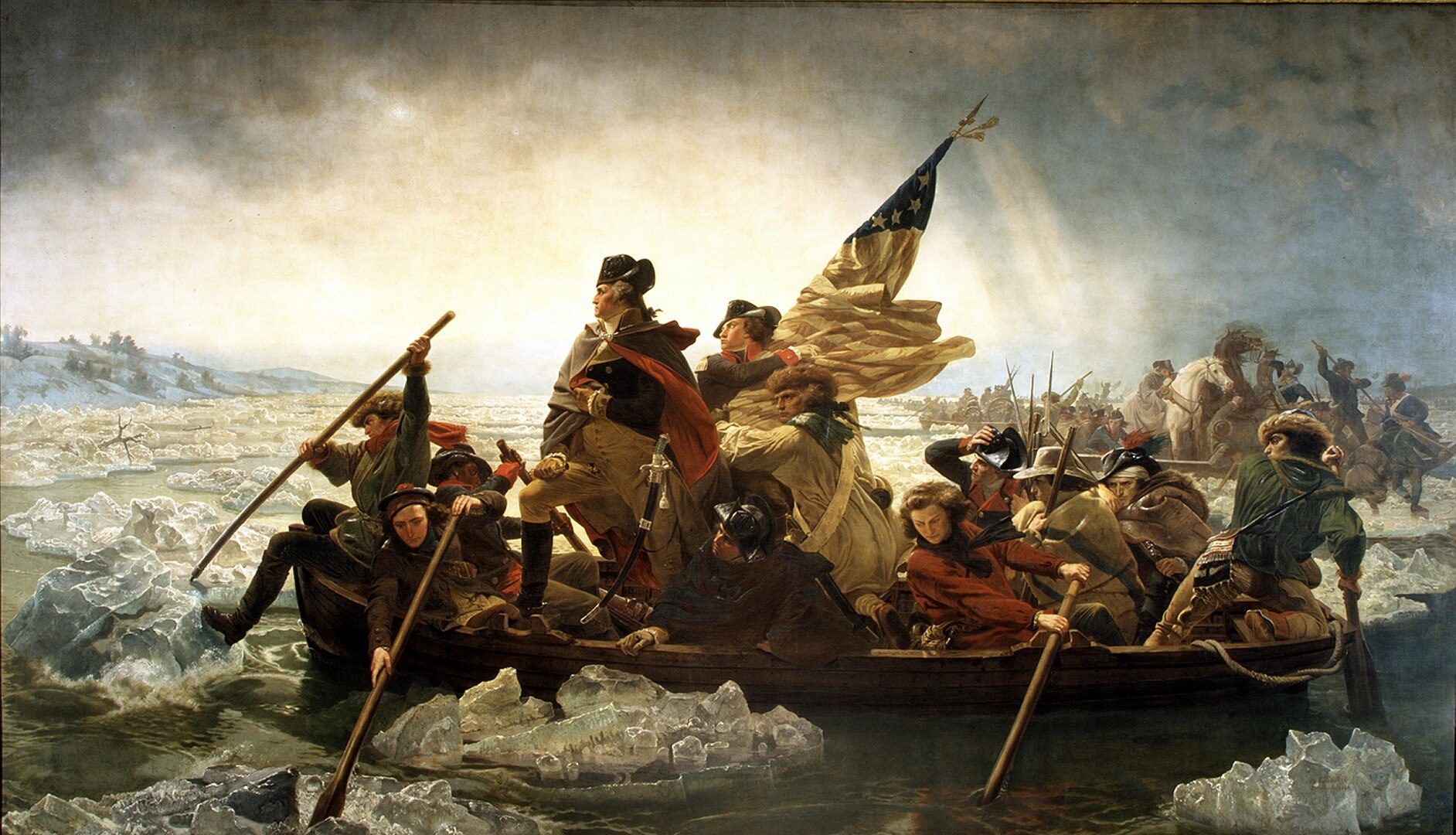
Washington Crossing the Delaware, an 1851 portrait by Emanuel Leutze depicting Washington and Continental Army troops crossing the river prior to the Battle of Trenton on the morning of December 26, 1776.
For this year’s Christmas post, I’m going with a patriotic theme in preparation for 2026 being the 250th anniversary of the United States of America. The images here commemorate Washington’s crossing of the Delaware River 249 years ago in 1776.
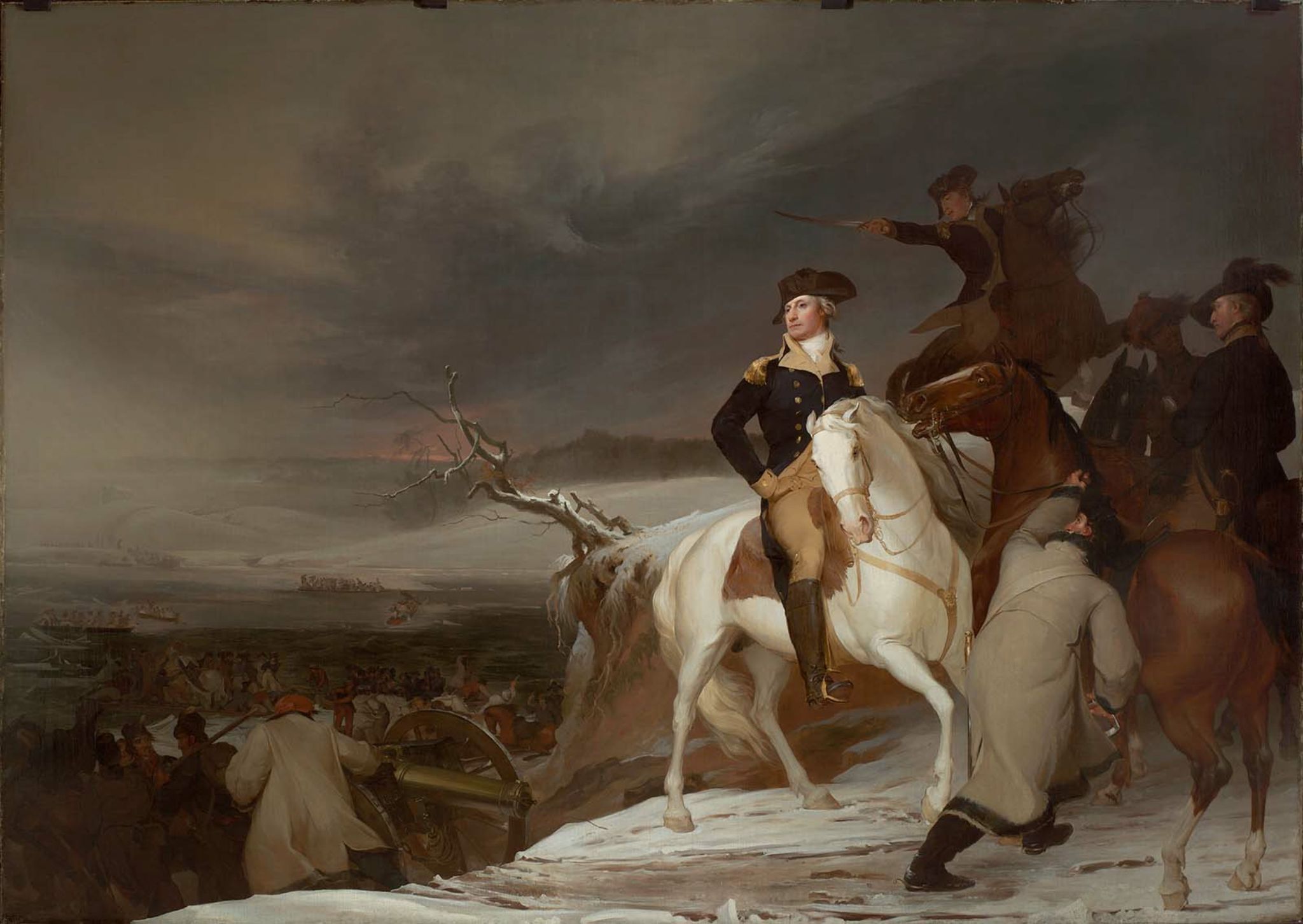
The Passage of the Delaware, an 1819 portrait depicting the crossing by Thomas Sully.
On the morning of December 25, George Washington ordered his Continental Army troops to prepare three days’ food and issued orders that every soldier be outfitted with fresh flints for their muskets. Washington was somewhat worried by intelligence reports that the British were planning their own crossing once the Delaware was frozen over. At 4:00 pm on December 25, Washington’s army arrived to begin the crossing of the river. The troops were issued ammunition, and even the officers and musicians were ordered to carry muskets. They were told that they were departing on a secret mission.
Marching eight abreast in close formations and ordered to be as quiet as possible. Washington’s plan required the crossing to begin as soon as it was dark enough to conceal their movements on the river, but most of the troops did not reach the crossing point until about 6 pm, about ninety minutes after sunset. As the evening progressed, the weather became progressively worse, turning from drizzle to rain and then to sleet and snow. “It blew a hurricane,” one soldier recalled.
Washington had given charge of the crossing to his chief of artillery, Henry Knox, who had successfully dragged the cannons from Fort Ticonderoga in December 1775 and arrived with them outside of Boston in January 1776. In addition to the crossing of large numbers of troops (most of whom could not swim), he had to safely transport horses and eighteen pieces of artillery over the river. Knox wrote that the crossing was accomplished “with almost infinite difficulty”, and that its most significant danger was floating ice in the river. One observer noted that the whole operation might well have failed “but for the stentorian lungs of Colonel Knox”. The unusually cold weather of the 1770s and the icy river were likely related to the Little Ice Age. The rest as they say – “is history.”
I wish all the readers of the Huletts Current and your families a very merry Christmas and wonderful 2026. We live in the greatest country in the history of the world, in arguably one of the most beautiful spots. Be well.
(Click images to see larger versions.)