Post Star: LG Park Commission Hires New Leader
Post Star: $100,000 in state money secured for Lake George clam fight
News Enterprise: Post-Star lays off one-third of news reporting staff
News & Opinion About Huletts Landing, N.Y.
The Lake George Association supports a new bill on invasive species introduced in the New York State Senate by Senator Betty Little, Bill S6826. A companion to the bill introduced earlier this month in the assembly, this new Senate bill will authorize the Department of Environmental Conservation (DEC) to establish a list of invasive species that will be prohibited from being sold, transported, and introduced in New York State.
“The Lake George community spent over $630,000 in 2011 to fight the Asian clam alone,” said Walt Lender, executive director of the Lake George Association, “and we expect to spend a similar amount in 2012. We need to do everything we can to prevent the very expensive spread of invasive species. This New York law will help us to do that on a statewide basis.”
Assembly members Sweeney and Sayward introduced a similar bill – A9422 – earlier this month.
“The LGA thanks Senator Little, and assembly members Sweeney and Sayward, for taking the lead on this important legislation,” said Emily DeBolt, LGA Director of Education. “Many of our neighboring states throughout New England have already established laws of this kind, including Vermont, Connecticut and Massachusetts. It is essential that New York State join them so we can work together regionally to help prevent the spread and introduction of invasive species,” she said.
Once introduced, invasive species are expensive to eradicate and manage, and threaten valuable industries in New York State. As a nation we spend $167 billion each year to address only the economic impact of invasive species. In addition to significant ecological and health impacts, invasive species can prevent access to waterways important for the fishing industry, and can invade forests and farms, resulting in the loss of timber and crops.
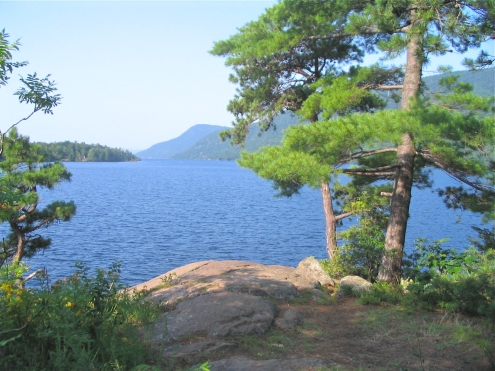
The view south from Vicars island campsite # 9 has been added as a desktop wallpaper on the “Wallpaper” page.
George,
My family has been camping on the LG islands since 1961 and we’ve kept a boat at Island View Marina for the past 20 years or so. I just wanted to submit a wallpaper piicture I took from Vicars #9 looking south along the Tongue Mt Range. Hope you feel it will be useful for others, as I’ve had it as my desktop background since I took it.
Gurk Fennelly
Thanks Gurk. What better way to share memories of Huletts Landing and Lake George than to share desktop wallpaper?
I’ve added Durk’s picture to the wallpaper page. If you have a shot that you’d like to share, please send it to me and I’ll try to post it.

On Thursday, March 22, 2012, the Lake George Park Commission met to review the report of the Ad-Hoc Committee on Invasive Species (AIS) at Fort William Henry Conference Center in Lake George, NY.
The Ad-Hoc Committee on Invasive Species (AIS) is a sub-committee of the Lake George Park Commission.
Here is a summary of what was discussed at the meeting of March 22nd.
The Lake George Association’s Lake Steward program has collected data from 2008-2011 indicating that boats have come from over 300 different waterbodies across the region to Lake George. These include 121 waterbodies in New York and 197 waterbodies in other states.
This 7 page pdf document summarizes the program’s finding over this 4 year period. Boats inspected, invasive species removed and at-risk boats are all summarized.
The deadline to apply for the Lake George Land Conservancy’s annual scholarship totaling $1,000 has been extended from April 1st to April 15th.
To apply, a high school senior must submit an essay between 1,000 and 2,000 words addressing this year’s question: “If you were elected the Wizard Mayor of the Lake George watershed, what would your first three projects be and why?”
Essays should still be submitted by email to: hbartonbenedict@lglc.org
Eligibility is restricted to high school seniors who live year round in the Lake George basin and includes year-round residents of Huletts Landing. One $500 first-place and one $250 second-place prize will be awarded and an additional $250 will be awarded to the first-place winner’s school science program.
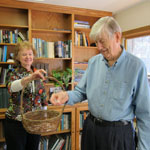
And the winner is…. Peg Olsen! Peg’s name was drawn by Art Franz as the winner of our 2012 Lake George Land Conservancy Name the Trail Drawing.
Held March 6th, the drawing ended a fundraiser for continued support of the Last Great Shoreline acquisition.
At stake was the right to name the Cook Mountain Preserve’s summit trail. Climbing 885 feet over one and one-quarter miles from the base of the preserve to its summit, the trail includes spectacular views of Lake George and Lake Champlain.
Cook Mountain Preserve, located on Baldwin Road in Ticonderoga, was established in 1990 through the generous donation of 176 acres by Donald and Marjorie Delano. In 1995, the preserve was expanded by an 18-acre addition donated by Dr. and Mrs. George Boyle.
Peg was thrilled upon receiving the good news. She chose to name the trail “the Ridges Trail”, in honor of her grandfather Robert P. Ridges and mother Jane Ridges Olsen, whom she says were “both great conservationists who inspired me to dedicate my life to conservation.”
The Lake George Land Conservancy thanks everyone who participated in the Name the Trail Drawing, and congratulates Peg for being the 2012 Name the Trail winner!
Photo courtesy of the Lake George Land Conservancy.
On Friday, March 16, 2012, the Lake George Park Commission Ad-Hoc Committee on Invasive Species (AIS) met in Bolton Landing.
The Ad-Hoc Committee on Invasive Species (AIS) is a sub-committee of the Lake George Park Commission.
Sportsman want Lake George protected from invasive species and their 24/7 access to fishing protected.
Sportsmen don’t want any invasive species in the pristine waters of Lake George because they are a threat to the fisheries and the water purity. Anglers have seen the decline of water conditions and the fisheries of many bodies of water throughout NY. Fishermen enjoy travelling from one lake to another so they can fish different species and they have seen conditions change and are aware of the effects that invasive species can make to any body of water. Sportsmen take measures to prevent transporting and introducing invasive species from one body of water to another. Sportsmen read the signs located at public boat launches regarding invasive species as well as the many brochures with information on the prevention of the spread of invasives.
Members of the Lake George Fishing Alliance believe that education of all boaters is of great importance and a key factor to prevent the spread of any invasive species from one body of water to another. We highly respect and promote the Lake Steward program to help educate all boaters. Sportsmen are against any suggestion or ideas of the Park Commission’s Committee on Invasive Species Prevention to mandate boat inspections and to gate any public boat launch to prevent access and launching of a boat when an inspector is not on duty. Anglers don’t fish only between the hours of 9 to 5. Many sportsmen begin hunting or fishing before sun-up. We also hunt and fish 12 months of the year and not just during the Lake George tourist season. Sportsmen want and need 24/7 unrestricted access to launch our boats at all public boat launches that our hunting and fishing licenses fund.
Walt Kendall
President of the Lake George Fishing Alliance
www.lgfa.org
The Lake George Association (LGA) is reminding area residents that a new state law went into effect at the beginning of this year limiting the use of lawn fertilizers.
“The weather has been so mild that we know people are beginning to think about their spring gardening,” said LGA Education Director Emily DeBolt. “It’s important that people remember the new rules regarding lawn fertilizers, and to let people know that the staff here at the LGA is always available to help people plan for more lake-friendly gardening and landscaping.”
The new state law:
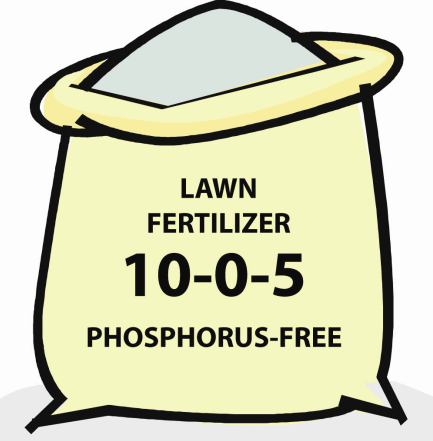
Prohibits the use of phosphorus-containing lawn fertilizer unless establishing a new lawn or a soil test shows that the lawn does not have enough phosphorus.
Prohibits the application of lawn fertilizer on impervious surfaces and requires pick up of fertilizer applied or spilled onto impervious surfaces.
Prohibits the application of lawn fertilizer within 20 feet of any surface water except: where there is a vegetative buffer of at least 10 feet; or where the fertilizer is applied by a device with a spreader guard, deflector shield or drop spreader at least three feet from surface water.
Prohibits the application of lawn fertilizer between December 1 and April 1.
Requires retailers to display phosphorus containing fertilizers separately from non-phosphorus fertilizers and to post an educational sign where the phosphorus-containing fertilizers are displayed.
“The new state law will not impact agricultural fertilizer or fertilizer for gardens,” DeBolt said. “However, local residents in the towns of Lake George and Queensbury are required to follow stricter standards,” she said. The town and village of Lake George have made it illegal to apply fertilizer containing phosphorus anywhere on property within town or village borders. Last April, Queensbury passed a law to ban the use of any fertilizer within 50 feet of the shoreline of Lake George. The Queensbury law also forbids the use of phosphorus fertilizer between 50 and 200 feet of the Lake George shoreline.
“Since phosphorous in stormwater runoff is a real threat to the water quality of Lake George, following the new state and local laws will make a big difference,” said DeBolt. “The LGA was instrumental in supporting and advocating for all of these laws when they were under development. While clearly some compromises had to be made, these laws are a huge step forward in protecting Lake George,” she said.
The LGA also reminds gardeners who may be chomping at the bit to get out into their yards, as well as area lawn maintenance companies, of additional ways they can protect the fresh waterbodies in our region:
Leaves and garden clippings are loaded with phosphorus, so they need to be raked away from lakes and streams, as well as storm drains.
Areas of lawn can be minimized by planting more native plants, which will ultimately help preserve water quality, while also providing benefits for wildlife.
For an existing lawn, keeping it dense and healthy is important, because a healthy lawn can reduce surface runoff and will filter and purify water before it enters the soil and groundwater.
Excess fertilizer in the early spring can promote top growth at the expense of root growth.
Most lawns do not need any fertilizer, and are best fertilized only in the fall, after Labor Day. Even then, nitrogen is usually all that grass needs to achieve dense vegetation. By leaving legumes, like white clover, in your lawn you can add nitrogen, naturally.
On Friday, February 17th at 12:26 pm I received an email from the staff at the Lake George Park Commission containing the public notice of a meeting of the Lake George Park Commission at 1:30 pm.
That’s right: one hour and six minutes of lead time to the actual meeting!
Here is the exact email, which I received at 12:26 pm:
The Lake George Park Commission Committee on Invasive Species Spread Prevention will be holding a meeting this afternoon at the Bolton Town Hall at 1:30 p.m.
I am sorry for the delay in getting this notice out in time.
Whenever you see something like this, you pretty much know that that something big (and usually not good) is about to happen.
What happened at that meeting; which the public was notified of one hour and six minutes before it took place?
You can read about it here in the Post Star.
Everyone is against the spread of invasive species. However, legitimate issues are being raised and need a full hearing.
Read the Adirondack Journal piece here.
Last year, I asked the Lake George Association if they would provide a “Lake Steward” inspector for Huletts Landing and they told me they didn’t have the funding.
Here is my proposal: A lake steward should be offered to inspect boats for invasive species at every launching facility. That steward would be paid by the Lake George Park Commission or the cost of providing that steward could be deducted from that marina’s dock fees paid to the Park Commission. Fisherman coming off-hours or off-season would not be discriminated against.
That’s a solution that could be implemented fairly quickly and that could be a win/win for everyone.
Here are some of my questions:
Where will the water that is used to wash off these unclean boats with possible invasive species drain to?
Are canoes, kayaks and car top boats included? If not, why not?
Why is this washing facility being put at Norowal Marina and not at the public state launch?
Is this the first step in banning all boats on the lake?
Are the commissioners making this decision serving on expired terms?
Whatever you think, we should all take notice, when we’re given one hour and six minutes to respond.
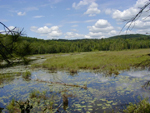
The Lake George Land Conservancy closed on the purchase of nearly 500 acres of ponds, marshes and forests in the uplands of Bolton Landing. The property, located between Padanarum and Trout Falls Roads, as well as a portion lying to the west of Trout Falls Road, will be opened to the public with hiking trails and pond access this summer. (Photo at right: a section of the beaver pond within the Padanarum property.)
The LGLC purchased the property for $500,000 from a conservation buyer, who held the land until LGLC was able to finalize the purchase. Funding for the deal will be provided through two grants: a State Environmental Protection Fund (EPF) grant from the New York Office of Parks, Recreation and Historic Preservation, which was awarded to LGLC in 2007 for this acquisition, and a Federal North American Wetlands Conservation Act grant.
The Bolton property includes the headwaters for Indian Brook and contains important wildlife habitat within its large, unfragmented forest and wetland complexes. Protecting this fragile property prevents excess nutrients and sediments from flowing into Indian Brook and Northwest Bay.
The LGLC is thrilled that this acquisition has finally come to fruition. Protection of this property will assure that the headwaters of Indian Brook will remain clean and wild, which will protect the drinking water quality of Lake George. This is a wilderness treasure and a gift to the future of incalculable value, and the LGLC thanks the many people who worked to make the acquisition possible.
LGLC staff and volunteers will create hiking trails this summer for passive recreation, exploration and education, as well as place a kiosk on the land that will help visitors learn of the many types of wildlife that use the land for mating, nesting and habitation. The northern pond will remain as a wilderness area, accessible primarily by canoe or a wood’s trail where visitors can enjoy the rare experience of wilderness in Bolton Landing.
Whitehall’s Roma Sold, Will Reopen Under New Name
The Post Star tell us about the Waters family, the new owners of what was the Roma.
Committee of Lake George Park Commission Hopes to Test Decontamination Program
The Post Star reports here.
Superbowl Champs to Return to Albany
The GiantsFootballBlog.com gives a reason to stop in Albany in August.
The Hogs Are Running Wild
Invasive feral hogs appear on the eastern side of the Adirondacks, so says NCPR.
Kateri to be Canonized in October
October 21st is the canonization date for the young Native American who lived in the Mohawk Valley in the 17th century, reports the Times Union.
Another American Captures Gold in Lake Placid
Katie Uhlaender won at the skeleton world championships Friday on Mount Van Hoevenberg in Lake Placid. Read ESPN to learn more.